LAND OF THE JAGUAR STRUGGLES WITH RISING SEAS


 GEORGE TOWN, Guyana - The low-lying Caribbean nation of Guyana (The Land of the Jaguar) is on the frontline in the battle against rising seas.
The majority of Guyana's population lives on its coastline, which is below sea level and heavy rainfall often makes things much worse.
Now this poor nation spends up to $6m a year - money it can ill afford - building up damaged sea walls, maintaining sluice gates which close when the tide is high and purchasing new equipment to pump the water back out to sea when the tide is low.
 However, The World Bank and Global Environmental Facility have approved $3.8 million in grant funding to protect low-lying coastal areas in Guyana threatened by rising sea levels, an official said on Friday.
- This is the first project of its kind to be approved under the Global Environmental Facility's Special Climate Change Fund. It will look at ways to improve coastal drainage in the small South American country.
 Gerald Meier, a consultant with the World Bank's hazard risk management group, said the project was responding to the catastrophic flooding in Guyana in 2005, which affected most of the inhabited northern coast of the country where up to 90 percent of the population lives.
- He said the Conservancy Adaptation Project would collect technical data about the land and the rising seas that would help the government to make informed decisions on reducing Guyana's vulnerability to flooding.
- Using a computer model and an aircraft-guided remote sensing system, World Bank experts will be able to collect topographic data of how much of the land is sloping into the sea around Guyana. It will also establish how surface water could be drained and will look at how future development will impact drainage.


 According to Meier, the coastal topography of Guyana is very gently sloping and if someone just builds a mound around their house, that can have an impact on somebody else downstream.
Caroline Anstey, the bank's country director for the Caribbean, said reducing Guyana's vulnerability to floods was critical for its economic stability.
TEAR GAS, WATER CANON FIRED AT 10,000 PROTESTERS IN MALAYSIA

 KUALA LUMPUR, Malaysia - Police fired tear gas and water cannons at some 10,000 people comprising mostly Opposition Party, People Coolation(PR) supporters trying to hand over a memorandum to the King to protest the federal government's bailout of UMNO crony firm SYABAS, which has a monopoly of the state's water distribution.
 At least 49 people including Kota Damansara state assemblyman Dr Nasir Hashim and five students were detained by the police at a facility in Cheras.
But it was only in the late evening that the police finally agreed to release those held except for two people who did not have their identity cards with them.
 Kuala Lumpur deputy police chief Amar Singh had earlier agreed to their release when he urged protesters to disperse from the National Mosque, where riot police had fired round after round of tear gas and water cannons at the civilian crowd.
Demostration on Sunday, 5 December 2010, Kuala Lumpur -VIDEO
SNOW CAUSE HAVOC IN EUROPE, 60 REPORTED DEAD

 LONDON, United Kingdom - A cold snap across Europe has claimed at least 60 lives, authorities said Friday, as snow disrupted transport in Britain and serious flooding forced thousands of people to be evacuated in the Balkans.
Seventeen people died from the cold in Central Europe in the past 24 hours, bringing the total this week to 45. A further 11 died in Russia, plus three in France and one in Germany, according to local authorities.
- At least 30 people, mainly homeless men, have died in Poland in the past week, and temperatures dropped to minus 15 degrees Celsius (five degrees Fahrenheit) overnight.
- Temperatures plunged to minus 20 degrees Celsius (minus four Fahrenheit) in Braemar, Scotland, while Britain struggled to get back to its feet after days of transport chaos caused by bad weather.
 London's Gatwick airport reopened on Friday after a two-day shutdown due to snow, but other airports including London Heathrow and Glasgow warned of more cancellations and delays.
- Many trains were cancelled due to snow and travel by road was slow going, while around 2,000 schools remained closed.
- Despite Gatwick finally clearing the runways, freezing fog meant flights would be limited and "delays and cancellations inevitable", Europe's eighth-busiest passenger airport said.
 Eurostar, which operates high-speed passenger trains linking London with Paris and Brussels, said it was running a revised timetable, with 17 services cancelled. It warned of delays through the weekend.
- Britain's Transport Secretary Philip Hammond has ordered a review of how transport operators have coped with the cold snap.
- A Downing Street spokeswoman said there were "no major concerns" over supplies of food, petrol, diesel or gas despite the continued freezing conditions, even though there were warnings of shortages in some newspapers.
- Police in Newcastle in the northeast of England reminded locals to wear a coat when they hit the pubs this weekend. "Geordies" are famed for their indifference to cold weather.
 But police in Chatham, southeast of London, were not amused when a woman called the emergency services to report the theft of a snowman.
- In Germany a man in his sixties was found dead in the snow outside a savings bank in Leipzig.
- Authorities ordered all drivers to equip their vehicles with winter tyres from Saturday, or face a penalty of up to 80 euros (105 dollars).
- In France road restrictions introduced after snowfall in some areas were affecting one important seasonal trade: Christmas trees.
- Temperatures in Moscow hit a low of minus 24 degrees Celsius (minus 11 Fahrenheit), the lowest for the season in decades, weather authorities said.
- In the remote Evenk region in Siberia, temperatures were a crisp minus 51 degrees Celsius (minus 60 Fahrenheit).
 Meanwhile in the Western Balkans, flooding caused by rivers swollen through heavy rainfall forced thousands of people from their homes in Albania, Bosnia, Serbia and Montenegro on Friday, officials said.
- More than 7,000 people were moved to safer areas in Albania, where Prime Minister Sali Berisha described the situation as "very serious".
- Thousands of houses were damaged and roads linking the capital Tirana to the north of the country were completely blocked, local authorities reported.
- In Bosnia authorities declared a state of emergency after some 1,000 homes were flooded around the town of Bijeljina along the Drina river, the natural border between Bosnia and Serbia.


 In Serbia, at least 1,400 people were evacuated from the town of Loznica. More than 3,000 more people were at risk from the flooding of the Drina in the area of Loznica, Serbia's interior ministry said.
In Montenegro around 1,300 people were evacuated due to the "unprecedented" floods that hit the country, Interior Minister Ivan Brajovic said.
NAGA VIPER IS WORLD'S NEWEST HOTTEST CHILLI


The Naga Viper rates an astonishing 1,359,000 on the Scoville scale, which measures heat by the presence of the chemical compound capsaicin.
 WARWICK, United Kingdom -It is so hot weapons experts plan to use a couple in a spice bomb to incapacitate enemy soldiers on the battlefield. But the world’s hottest chilli does not hail from India, Thailand or Mexico but from a small greenhouse in Cumbria, Warwick, England
Fiery food mavens seeking to one-up each other now have to gear up for a whole new test of culinary bravado: the world's hottest chili pepper-the Naga Viper, the latest claimant to the world's-hottest-pepper crown, outdistances its predecessor, the Bhut Jolokia, or "ghost chili," by more than 300,000 points on the famous Scoville scale of tongue-scorching chili hotness.
 Researchers at Warwick University testing the Naga Viper found that it measures 1,359,000 on the Scoville scale, which rates heat by tracking the presence of a chemical compound. In comparison, most varieties of jalapeño peppers measure in the 2,500 to 5,000 range -- milder than the Naga Viper by a factor of 270.
 You might think the Naga Viper would hail from some part of the world with a strong demand for spicy food, such as India or Mexico. But the new pepper is actually the handiwork of Gerald Fowler(photo), a British chili farmer and pub owner, who crossed three of the hottest peppers known to man -- including the Bhut Jolokia -- to create his Frankenstein-monster chili.


"It's painful to eat," Fowler told the Daily Mail. "It's hot enough to strip paint." Indeed, the Daily Mail reports that defense researchers are already investigating the pepper's potential uses as a weapon.
 But Fowler, who makes customers sign a waiver declaring that they're of sound mind and body before trying a Naga Viper-based curry, insists that consuming the fiery chili does the body good.
- "It numbs your tongue, then burns all the way down," he told the paper. "It can last an hour, and you just don't want to talk to anyone or do anything. But it's a marvelous endorphin rush. It makes you feel great."

WIKILEAKS - A PHENOMENAL LEAKING WEBSITE SOURCES?

Wikileaks has established a reputation for publishing sensitive materials
 Whistle-blowing website Wikileaks is once again at the centre of attention. It is preparing to unveil a new set of US secret documents which it says are bigger than past releases on Afghanistan and Iraq.
 It is the latest in a long list of "leaks" published by the secretive site, which has established a reputation for publishing sensitive material from governments and other high-profile organisations.
- In April 2010, for example, Wikileaks posted a video on its website that shows a US Apache helicopter killing at least 12 people, including two Reuters journalists - during an attack in Baghdad in 2007.
- A US military analyst is currently awaiting trial, on charges of leaking the material along with other sensitive military and diplomatic material.
- In October 2009, it posted a list of names and addresses of people it claimed belonged to the British National Party (BNP). The BNP said the list was a "malicious forgery".
 And during the 2008 US elections, it published screenshots of the e-mail inbox, pictures and address book of vice-presidential candidate Sarah Palin.
- Other controversial documents hosted on the site include a copy of the Standard Operating Procedures for Camp Delta, a document that detailed restrictions placed on prisoners at Guantanamo Bay.


 It provoked controversy when it first appeared on the net in December 2006 and still splits opinion. For some it is lauded as the future of investigative journalism. For others it is a risk.
In mid-March 2010 the site's director, Julian Assange (photo), published a document purportedly from the US intelligence services, claiming that Wikileaks represented a "threat to the US Army".
The US government later confirmed to the BBC that the documents were genuine.
 The site now claims to host more than one million documents.
- Anyone can submit to Wikileaks anonymously, but a team of reviewers - volunteers from the mainstream press, journalists and Wikileaks staff - decides what is published.
- It is operated by an organisation known as the Sunshine Press and claims to be "funded by human rights campaigners, investigative journalists, technologists and the general public".
- Since Wikileaks first appeared on the net, it has faced various legal challenges to take it offline.
- In 2008, for example, the Swiss Bank Julius Baer won a court ruling to block the site after Wikileaks posted "several hundred" documents about its offshore activities.
 However, various "mirrors" of the site - hosted on different servers around the world - continued to operate. The order was eventually overturned.
- Wikileaks claims to have fought off more than "100 legal attacks" in its life, in part because of what is described as its "bulletproof hosting".
- The site is primarily hosted by Swedish ISP PeRiQuito (PRQ), which became famous for hosting file-sharing website The Pirate Bay.
- "If it is legal in Sweden, we will host it, and will keep it up regardless of any pressure to take it down," the ISP's site says.
- The site also hosts documents in other jurisdictions, including Belgium.
- Its experience of different laws around the world meant that it was drafted to help Icelandic MPs draw up plans for its Icelandic Modern Media Initiative (IMMI).
- The plan calls on the country's government to adopt laws protecting journalists and their sources.


 In Asia and the rest of the world, their Government have condemned Wikileaks website's publication. Thailand authorities have used their emergency powers to block domestic access to the WikiLeaks whistleblower website on security grounds.
The order came from the government unit set up to oversee the response to political unrest that rocked the nation's capital earlier this year, a spokeswoman for the Information and Communication Technology Ministry said.
RAGING FIRE IN ISRAEL KILLS AT LEAST 40 PEOPLE
 HAIFA, Israel - As if it was a wrath from God a forest fire raging out of control in the Carmel Mountains near the northern Israeli city of Haifa, the ambulance service says. It is reported about 40 Prison Service officer course cadets have been killed.
Police are evacuating thousands of people, including hundreds of prison inmates. There were reports that a bus carrying 50 prisoners was trapped in the inferno after overturning. Scores of people have been injured, the ambulance service said.
 The mass evacuation continues into night as fire rages in northern Israel, thousands of Haifa residents ordered to leave homes; at least 40 people dead, casualty information center reopens for first time since Second Lebanon War
- More than 15,000 people were evacuated from their homes by late Thursday as a massive fire continued to rage in northern Israel.

 The raging fire was spreading early Friday, with flames reaching the entrance to the Druze village of Isfiya as well as an IDF prison evacuated earlier. Firefighting teams were battling the blaze at both sites. The fire also reached the northern town of Tirat Carmel, whose residents were evacuated earlier. Police officials asked residents not to return to their homes at this time.
  Thursday night, officials in Haifa, Israel's third largest city, ordered the evacuation of many streets in the Denia neighborhood. Mayor Yona Yahav said that some 2,500 people were evacuated from their homes and sent to stay at shelters elsewhere in the city. He added that initially winds were pushing the flames towards the neighborhood but later changed direction, pushing the blaze southward.
- Earlier in the evening, some 5,000 residents in Tirat Carmel were ordered to leave home and thousands of others were evacuated from various northern communities. Two prisons and a psychiatric hospital were also evacuated for fear the flames would reach them.


Speaking earlier in the evening, Israel's firefighting chief, Shimon Romach said he was not optimistic about the prospects of containing the fire at this time.
AIR TRAFFIC ACROSS EUROPE GROUNDED

 BERLIN, German - Freezing temperatures and often blinding snowfall shuttered airports across Britain on Thursday, delayed flights across Europe and forced thousands of passengers in Germany to spend the night in trains.
In neighbouring Poland, the cold claimed 10 more lives, bringing the overall number of deaths to 18, Polish police spokesman Mariusz Sokolowski said. He urged Poles to report any homeless or drunk people on the streets to officers in hopes of saving their lives.
- Authorities in Berlin also kept subway stations, soup kitchens and heated buses open all night to provide shelter for the city's homeless.
- Gatwick Airport, one of Britain's busiest, was closed for a second straight day, cancelling another 600 flights as conditions continued to deteriorate. Edinburgh Airport and London's City Airport were also closed until late evening, according to the Eurocontrol central control agency's website.
- The agency also reported significant delays at London Heathrow, Paris' Charles de Gaulle, Amsterdam's Schiphol, Berlin's Tegel and Duesseldorf airports.
 Travellers hoping to fare better by road or rail were equally stymied as snow continued to fall across the UK and most of Germany, leaving thousands of motorists stranded overnight in freezing temperatures.
- Some 3,000 rail passengers were also stranded overnight and struggled to catch a few minutes' sleep in their trains, German railway operator Deutsche Bahn said.
 Some 200 stranded passengers in Germany's Frankfurt hub spent the night in parked night trains after hotels filled up. Nothing was moving along many of the nation's high-speed train links, such as between Nuremberg and Leipzig in the south and east, or between Hamburg and the Danish capital Copenhagen in the north.
- Southeastern Denmark was also badly hit, and heavy snow falls and icy winds severely hampered road and rail traffic across much of the country. The Danish army has been mobilised to help emergency vehicles, using tracked armoured personnel carriers to help ambulances and other emergency vehicles cut their way through mounds of snow.
- Heavy snowfall in Poland also disrupted the normal flow of planes and trains and created a treacherous situation on many of the country's already abysmal roads.
- Thousands of Polish homes were left without electricity or heat as temperatures hovered around minus 10 Celsius. Several Romanian villages suffered a similar fate, while severe ice caused delays to traffic across the nation.


 On many German roads, traffic was chaotic with hundreds of minor accidents due to heavy snowfall. Police in Berlin alone counted 121 accidents on Thursday morning, spokesman Burkhardt Opitz said.
In the Netherlands, a light dusting of snow also led to chaos on the roads.
S.AFRICA THE WORLD'S LARGEST NUMBER OF HIV - POSITIVE CITIZEBS.
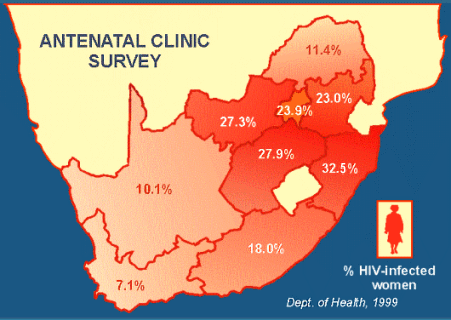
 PRETORIA, South Africa - South Africa's health minister is increasingly concerned at the cost of coping with Aids in the country with the world's largest number of HIV-positive citizens.
But in an interview marking World Aids Day today, Dr Aaron Motsoaledi said his government has no choice but to keep spending.
- "If we stop anything, we will just reverse all our gains," he said, adding that if better decisions had been made and stronger action taken earlier, costs would be lower now.
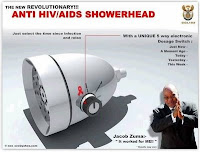 Last year on the day devoted to taking stock of the fight against Aids, President Jacob Zuma gained worldwide praise by pledging an ambitious testing and treatment campaign and more vigorous efforts to stop the disease's spread.
- Motsoaledi is in charge of the campaign, and has been praised for his energy and openness by Aids activists who repeatedly clashed with a previous health minister who promoted beets and garlic over Aids drugs and questioned the link between the HIV virus and Aids.
- Gail Eddy of the South African Institute of Race Relations, one of the country's oldest and most respected independent social research centres, said there are already signs of results that could be linked to a shift that began even before Zuma' announcement last year.
 The institute points to a lower HIV rate among young South Africans, and gradual gains in life expectancy, to about 50. Still, an estimated 5.7 million people in this country of 50 million are infected with HIV, more than in any other country.
- A report by an international team of experts commissioned by the South African government concluded that under the current Aids plan, $88 billion (Dh322.96 billion) will be spent over the next two decades, with the number of new infections falling gradually from 500,000 to about 350,000 annually.
- The report outlined a more ambitious plan that would cost $102 billion over the same period, and bring the number of new infections down to under 200,000 a year.
- The head of MTV's Aids charity was nervous about launching this year's World Aids Day campaign without a celebrity, but decided to put her faith in two personal tales told by unknown youngsters.
- The music channel is airing an hour-long television documentary "Me, Myself and HIV", which follows the lives of 25-year-old US-college student Angelikah and 21-year-old aspiring musician Slim from Zambia. Both are living with HIV.


 The US has launched a programme in Zimbabwe to encourage testing for HIV infection and the US ambassador, local musicians, broadcast personalities and soccer stars all took tests to publicize the occasion.
Alexio Kawara, one of the nation's most popular musicians, says Zimbabwean celebrities are leading the US programme launched on World Aids day to dispel fears over knowing one's HIV status.Source: EPA
ISRAEL COULD STRIKE IRAN WITHOUT US HELP

 WASHINGTON, USA - US Defence Secretary Robert Gates has told France that Israel could strike Iran without US military support but the operation might not be successful, according to a leaked document published on Sunday.
The US Defence Secretary Robert Gates gave his assessment at a meeting in Paris with former French defence minister Herve Morin, according to a secret summary of the session that was posted on the WikiLeaks website, part of a massive document dump of classified cables.
Source: AFP
 Asked by Morin if Israel had the capability to strike Iran without US assistance, Gates "responded that he didn't know if they would be successful, but that Israel could carry out the operation," it said.
- But Gates downplayed the value of any military operation against Iran, according to the document.
- The American defence secretary told Morin that he "believed a conventional strike by any nation would only delay Iranian plans by one to three years, while unifying the Iranian people to be forever embittered against the attacker," it said.


VISITORS GEOFLAGS SINCE AUGUST 26, 2009