THE SIGHT AND SOUND OF BP WELL ON MEXICAN GULF COULD BE TAKEN AWAY BY STORM


 ON THE GULF OF MEXICO – Ships relaying the sights and sounds from BP's broken oil well stood fast Friday as the leftovers of Tropical Storm Bonnie blew straight for the spill site, threatening to force a full evacuation that would leave engineers clueless about whether a makeshift cap on the gusher was holding.
- Vessels connected to deep-sea robots equipped with cameras and seismic devices would be among the last to flee and would ride out the rough weather if possible, retired Coast Guard Adm. Thad Allen said.
- "If conditions allow, they will remain through the passage of the storm," Allen said in New Orleans.
- Bonnie made landfall south of Miami early Friday as a feeble tropical storm with top sustained winds of 40 mph. It broke apart as it crossed Florida and was a tropical depression as it moved into the Gulf, but forecasters expected it to strengthen slightly and roll over the spill site around midday Saturday.
- Some of the dozens of vessels working at the well site were leaving Friday evening. By daybreak, all but a handful, including those providing video images, were expected to remain. Allen said individual captains would decide when to leave, based on weather conditions.
- The ships holding the robots would be among the first to return if forecasts force them to leave, but they could be gone for up to two days, said Allen, the federal government's spill chief.
- The mechanical plug that has mostly contained the oil for eight days will be left closed, Allen said. But if the robots are reeled in, the only way officials will know whether the cap has failed will be if oil pooling on the surface appears in satellite and aerial views — provided the clouds aren't too thick.
- Audio surveillance gear left behind could tell BP whether the well is still stable, but scientists won't be able to listen to the recordings until the ships return to the area.
- Allen expressed increasing confidence in the experimental cap despite a few leaks that initially worried government experts. Scientists say even a severe storm shouldn't affect the plug, nearly a mile beneath the ocean surface 40 miles from the Louisiana coast.
- "There's almost no chance it'll have any impact on the well head or the cap because it's right around 5,000 feet deep and even the largest waves won't get down that far," said Don Van Nieuwenhuise, director of professional geoscience programs at the University of Houston.
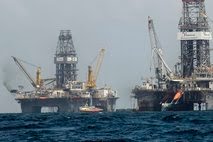 The broken well spewed 94 million to 184 million gallons into the Gulf after the BP-leased Deepwater Horizon rig exploded April 20, killing 11 workers.
BP is likely to be fined per gallon spilled, although determining that could be difficult. Concentrations of underwater oil at least doubled last month, according to the National Oceanic and Atmospheric Administration.
Researchers at the University of South Florida said Friday they have the first scientific proof that two giant plumes of oil beneath the surface of the Gulf came from the broken well. BP initially denied the plumes even existed.
ANIMALS SUFFER AFTER OIL SPILLS FROM THE GULF OF MEXICO


 BP has abandoned its original plan to use a diamond wire cutter that its engineers had hoped would cleanly cut the riser pipe spewing oil into the Gulf of Mexico. It will instead use a more effective, if less precise, cutter, the federal government's point man on the disaster said Wednesday.
 Yet, Oil oozes through the reeds at the mouth of the Mississippi River near Venice, Louisiana. BP reported further progress Tuesday in stemming the Gulf of Mexico oil spill, but new evidence showed part of the slick could be swept to Florida's beaches and sensitive coral reefs killing birds and animal on its way.
The following scenarios are examples reflecting to the wrath of the oil spill's aftermath ;
Bird is mired in oil on beach

A bird is mired in oil on the beach at East Grand Terre Island along the Louisiana coast on Thursday, June 3, 2010. Oil from the Deepwater Horizon hasaffected wildlife throughout the Gulf of Mexico.
Hermit crabs covered are shown on coast

Hermit crabs covered in reddish-brown oil are shown on the coast at Dauphin Island, Ala., Tuesday, June
Brown pelican covered in oil sits on beach

A brown pelican covered in oil sits on the beach at East Grand Terre Island along the Louisiana coast on Thursday, June 3, 2010. Oil from the DeepwaterHorizon has affected wildlife throughout the Gulf of Mexico.
Dead fish is seen on beach

A dead fish is seen on the beach in Lafourche Parish, Louisiana. It is unknown how the fish died. Days after failing to contain the Gulf of Mexico oilspill with a giant dome, BP said Monday it will make a second attempt this week using a smaller version dubbed the "top hat".
Brown pelican is mired in heavy oil

A brown pelican is mired in heavy oil on the beach at East Grand Terre Island along the Louisiana coast on Thursday, June 3, 2010. Oil from the DeepwaterHorizon has affected wildlife throughout the Gulf of Mexico.
Dead shark is seen laying

A dead shark is seen laying in the surf as concern continues that the massive oil spill in the Gulf of Mexico may harm animals in its path, in Mississippi.An impromptu recovery fleet rushed Tuesday to an uninhabited US island chain in the Gulf of Mexico as the leading edge of a giant oil slick reached its shores.
Bird covered in oil flails

A dead bird covered in oil flails in the surf at East Grand Terre Island along the Louisiana coast Thursday, June 3, 2010. Oil from the Deepwater Horizon hasaffected wildlife throughout the Gulf of Mexico.
Dead sea turtle is seen laying on beach

A dead sea turtle is seen laying on a beach as concern continues that the massive oil spill in the Gulf of Mexico may harm animals in its path, in Waveland,Mississippi. As spring blooms in the southern United States heralding the arrival of fledgling animal life, environmentalists are anxiously watching the spread of a giant oil slick off the coast.
Dolphin lies on dead on beach

A dolphin lies on dead on a beach on Horn Island,Miss., in the Gulf of Mexico, Tuesday, May 11, 2010. Officials say that at least sixdead dolphins have been found on the Gulf Coast since May 2. Authorities don't know whether the animals died from the Oil in the Gulf.

An oil-covered crab is seen on an oil-impacted beach at the mouth of the Mississippi River near Venice, La. Wednesday, May 19, 2010. Oil from last month'sDeepwater Horizon oil rig explosion in the Gulf of Mexico has started drifting ashore along the Louisiana coast.
Source: AP


VISITORS GEOFLAGS SINCE AUGUST 26, 2009